Search

Tuesday, May 24, 2011

Pecos Prison Blues: Investing in Immigrant Imprisonment

Protest in front of Reeves County Courthouse/Barry Dec. 2009

(Part of a continuing Border Lines series on the Reeves County Detention Center in Pecos, Texas.)

The generally favorable prospects for the private prison industry are somewhat clouded by tight state budgets that are causing state governments to reevaluate tough sentencing laws, as well as by steadily declining crime rates.

But prison investors and the private prison firms have been able to count on the federal government to keep the business of renting out prison beds thriving. A $19.7 million bond offering last year by Carlyle Capital Markets Inc. (CCMI) of Dallas on behalf of the county-owned Reeves County Detention Center in Pecos, Texas makes this clear.

Sold to private investors, the bonds were used to reconstruct and expand the West Texas prison after immigrant inmates rioted two times more than two years ago to protest the death of a fellow inmate from mistreatment and medical abuse at this 3,700-bed prison complex operated by GEO Group, the country’s second largest prison corporation. 

By way of explaining why bond buyers shouldn’t worry about the security of their investments, the bond company lays out in great detail over 28 pages in the bond offering the corrections, contracting, and budget trends that bode extremely well for investments in private incarceration. Basically, as CCMI explains that it is all about strong “market demand” and “supply.”

The bond offering states that the statistical data about the U.S. corrections system suggests:

“[L]ong term trends related to prison inmate population growth and greater acceptance of privatization of private contractions operations favor the continuation of, if not an increase in, the outsourcing of inmate and detainee bed space by the FBOP, ICE, and the USMS….”
The cited “statistical data” included in the offering includes the following:

·      *  “Approximately one in every 100 adults in the United States is currently in prison or jail, the highest incarceration/detention rate in the world.”

·      *  “The total U.S. corrections population increased more than 123% to 7.2 million over the past two decades.”
·       
*“ *"The anticipated future growth in prison populations is expected to exacerbate the current problem of overcrowding at both federal and state levels.”

·       * “According to the Bureau of Justice Statistics, as of 2007-2008, 19 states were operating at 100% or more of their institutions’ highest capacity, while facilities under the jurisdiction of FBOP alone operated at 137% of highest capacity.”

Also boding well for prison investors is the immigrant crackdown, as the bond offering enthusiastically notes, observing that immigrant prison beds have become a “significant source of demand that is expected to continue.”  The bond prospectus also points out that, according to the Bureau of Justice Statistics, “by 2007 immigration-related offenses had become the nation’s second most prevalent cause for arrests by federal agents.”

Immigrants have since the 1980s been the fastest growing population of federal prisons and detention centers. But until the mid-1990s this growth trend was driven primarily by the steady increase in immigrant detention by the Immigration and Naturalization Service and after 2003 by the newly created Immigration and Customs Enforcement agency.

However,  the hardening of federal laws regulating immigrants, both legal and illegal, during the 1990s (especially the Illegal Immigration Reform and Immigrant Responsibility Act of 1996) and the new initiatives such as Operation Streamline that created criminal consequences, namely prison, for immigration violations has  meant, that even when considered apart from ICE detainee populations, immigrants are also the fastest growing population of the BOP and USMS populations.

BOP’s inmate population rose from 58,000 inmates in 1989 to 140,000 in 2000. As the bond certificate observed, “Efforts to combat illegal drugs and illegal immigration contributed to significantly increased conviction rates.”

This trend has continued, especially with the widespread institution of a program of the Department of Homeland Security called the Secure Communities Initiative, which, according to the bond offering, “ aims to identify, incarcerate, and eventually deport after service of a sentence those illegal aliens who have been convicted of local, state, and federal crimes.”

Actually, Secure Communities throws a still wider net since, through a data-sharing and communications systems instituted by ICE, the initiative alerts ICE whenever anyone with an immigration violation is booked in local jails not when or if they are convicted. But Carlyle Capital Markets is right to underscore the fundamental role that this new federal immigration-enforcement initiative plays in driving up the number of immigrants that are being channeled into private prisons.

(Next: Rise of “Contract Confinement” of Immigrants by BOP)

Thursday, May 19, 2011

Deep in the Heart of West Texas Darkness

(Third in a continuing series on the immigrant prison business in Pecos, Texas.)

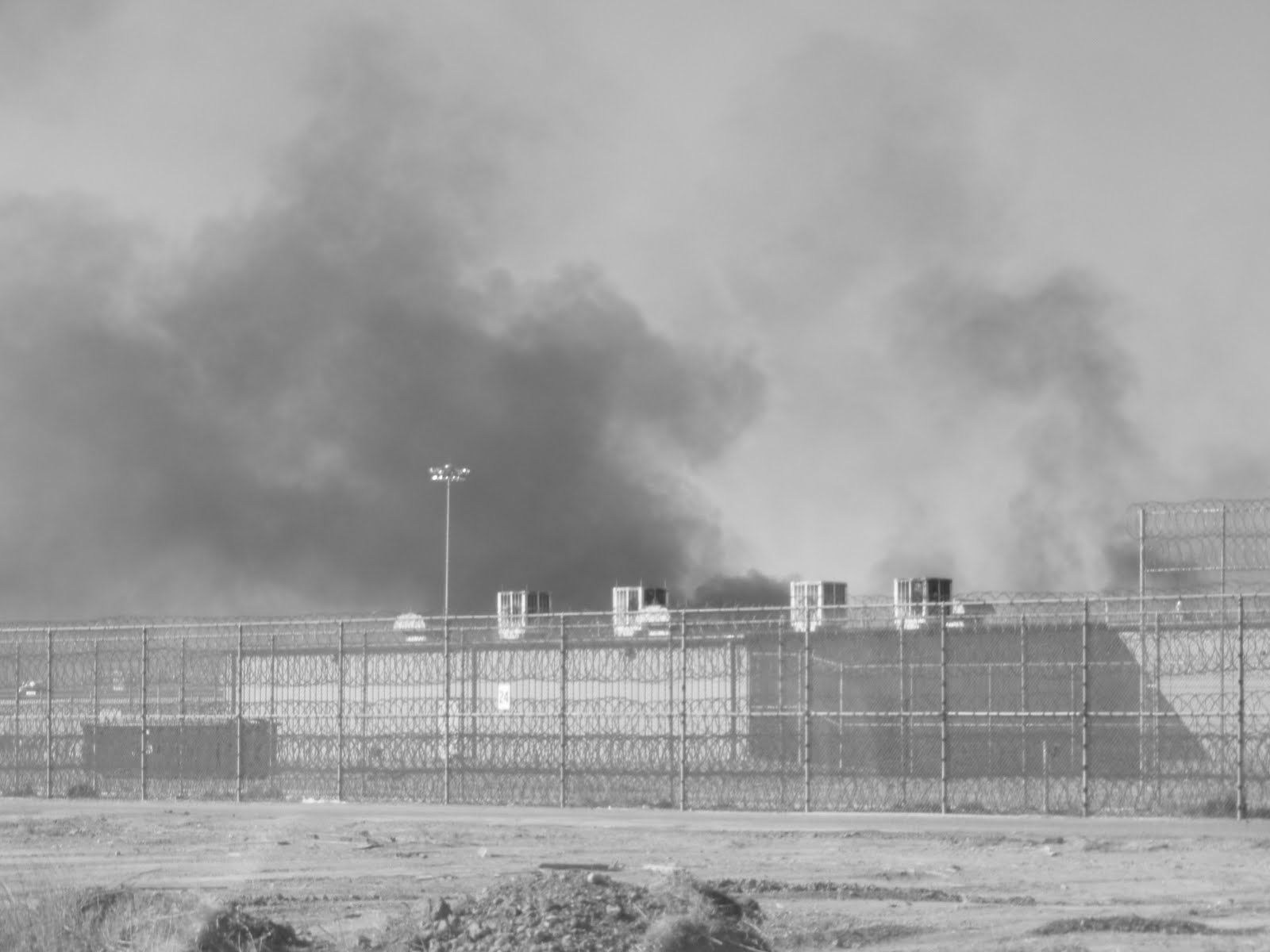
Outside prison during Jan./Feb riot/Photo by Tom Barry
Barry Friedman of Carlyle Capital Markets in Dallas once again came to the rescue in Reeves County.

Two successive riots in late 2008 and early 2009 over medical neglect by the immigrant inmates left the county-owned prison in Pecos badly damaged. The Bureau of Prisons (BOP) had removed several hundred inmates – and along with them bureau’s per diem payments. Rapidly accumulating reconstruction bills threatened not only the county’s capacity to meet its debt-servicing schedule on its outstanding prison bonds but also county’s depleted general operating fund.

While county officials fretted about the future of the community’s vaunted economic development project, Friedman went to work. No stranger to Pecos, Friedman has been involved in the prisons-for-profit project in this West Texas community since 1985.

At every step of the way – through three expansions of the Reeves County Detention Center – Friedman has arranged the funding and provided financial guidance. To keep the county and the prison from going under, Friedman has structured $170 million in revenue bond financing – known as lease-purchase bonds – to build, maintain, and expand the 3,752-bed prison for immigrants.

The Dallas-based bond broker boasts that he is “a friend of Reeves County.” Not only does Friedman count on the commissions from the bond sales, he was also hired by the county after the riots to serve as financial advisor (at $15,000 a month) – in an apparent conflict of interest -- to help Reeves sort its way out of the resulting financial crisis.

Friedman came to the community’s rescue with plan to refinance Reeve County’s existing prison debt and to sell nearly $20 million in new revenue bonds to cover prison reconstruction expenses not covered by insurance reimbursements.

Through the miracle of debt financing and speculative investment, the crises of county government and its prison complex have stabilized. Despite the debt restructuring and additional 2010 debt obligation, the county’s annual debt-service payments are only a million dollars higher – rising to $14.5 million -- than they were before the riots. Relieved to weather the immediate crisis, the Commissioners Court was unfazed that in just two years – in 2013 – it would need to pay an additional $5 million in debt serving. Nor was there any discussion of having a prison complex, whose value was estimated at $89 million after the latest expansion in 2007, with a debt of $100.5 million for the principal and a total debt-servicing burden of $135.8 million.

Under the present schedule, it won’t be until 2021 that Reeves County will retire its bond debt (if it doesn’t restructure as it has repeatedly done with past debt) and assume full ownership of the prison complex – by which time the prison will likely be substantially devalued and its BOP contracts long since expired.

A Town Dependency’s on Immigrants

It is hard to exaggerate the importance of the prison to the residents and economy of this isolated West Texas community. Expressing this utter dependence on the revenue and jobs from immigrant imprisonment, County Attorney Alva Alvarez lamented at a September 2009 county commission meeting: “Without that prison, basically, Reeves County is going under.”

The prison disturbances sparked no public discussion of the county’s responsibility to provide adequate medical care and decent conditions for the thousands of immigrants – most of whom are serving sentences for illegal reentry across the southwestern border – in their custody. Nor did the riots over prisoner abuse precipitate any reevaluation or reconsideration of the county’s prison-based economic development strategy.

At least when the prison is the issue, ethical or moral considerations simply don’t enter the discussion in Pecos. 

When talk about the Reeves County Detention Center does extend beyond issues of revenues, jobs, debt, and taxes, it is to blame the inmates. The immigrant prisoners are widely blamed for expecting too much and for costing the county too much. After all, as the logic goes, the more the county spends on the prison the less that is available for roads, education, the library, and other services -- and the more county residents have to pay in taxes.

Instead of eliciting sympathy, the prisoner protests over medical negligence and abuse at the prison stoked simmering resentments – over their expectations for medical care, dental care, affordable phone service when Reeves County residents themselves are having such a hard time making it and so many of them can’t afford the legendary American style of life.

Business as Usual

Driving across the immense nothingness to Pecos evokes a sense that you are traveling to a world apart.  It’s not exactly venturing into the heart of darkness. Yet there is an uneasy feeling of entering an unknown territory, where the unacceptable is accepted as business as usual.

It’s not this West Texas community is proud that it’s a prison town. But there is no shame either – even after the horrible death in solitary confinement (where he was placed not because of any disciplinary infraction but for medical observation) of Jesus Galindo, who suffered from severe epilepsy and was repeatedly denied proper medical treatment, that led to the first of the two prison protest riots in 2008-2009.

There is something irredeemably evil in Pecos, but hardly unique or even rare.

Virtually all the “criminal aliens” incarcerated in the county-owned prison are people of color, overwhelmingly poor Mexican men who have family members living in this country. But the pervasive apathy and absence in Pecos of any sense of responsibility about their immigrant charges are not the product, at least directly, of racism or an ethnic/cultural divide.

Several decades ago an Anglo elite ruled Reeves County. Today, though, the community is largely Hispanic, and the cast of county officials no longer routinely come from the caste of white ranchers, farmers, and oilmen that once constituted the area’s mini-oligarchy.

Seven of ten county residents are of Hispanic origin, and Hispanics are now the dominant presence in local politics. Eating out in Pecos means choosing among a half-dozen Mexican restaurants that offer the same bland fare of enchiladas and burritos. 

Pecos really isn’t that much different from most other American communities – local governments trying to balance budgets while providing needed services, people hanging on to jobs to pay the bills, the Walmart that is the town’s commercial center, a boarded-up downtown, with DVDs and cable the universal diversions.

What’s happening in Reeves County – and in three other similar criminal alien prisons in West Texas – is modern, reformed, progressive even when measured against the historic evils of penal colonies and prison farms in the South and elsewhere. The malevolence is found less in the prison conditions or treatment of individual inmates than in the bureaucracy of immigrant imprisonment.

Rules, regulations, procedures, inmate rights booklets, inspections, contracts, interagency and intergovernmental agreements, certificates, and even environmental assessments establish a framework of law and justice for the Reeves County Detention Center and the scores of other immigrant prisons. This framework lifts RCDC far above the standards that prevailed in the notorious prisons of America’s past or currently exist in the lawless prisons of Mexico – something that county residents are quick to point out.

Yet it is this very framework that enables the functioning of an immigrant penal system where justice, ethics, and decency are so starkly absent. The framework of regulations, contracts, and procedures devolves into a system where no one person or no one entity considers itself responsible. While on ugly display in Pecos, it is a system that is not native to West Texas but one that originates back east in Washington and Wall Street.

The federal bureaucracy of outsourcing immigrant prisoners, the bond financing system that allows local governments to build revenue-producing prisons, the private prison industry that enjoys the windfall of immigrant incarceration, and the processes of governance in Reeves County quickly rebounded from the shock of the immigrant protests.

The bureaucratic and financial structures that created this public-private prison enterprise and sustained it over the past 25 years quickly reassembled the building blocks for the renewed RCDC enterprise. 

Wednesday, May 18, 2011

Pecos: A Debtor's Prison in West Texas

(The second in the Border Lines series on Pecos Prison Town Blues, following up an article on "A Death in Texas" in the Boston Review of November 2009.)


“The prison represents big bucks for us,” Reeves County Treasurer Linda Clark told me.

The more than three thousand immigrants imprisoned at the Reeves County Detention Center in Pecos constitute the economic lifeblood of this West Texas town, where immigrant inmates constitute more than 40 percent of the town’s population of 7,500 residents.

“If they weren’t here, we wouldn’t be here,” remarked Clark, explaining that the county-owned prison that is operated by the private prison giant GEO Group employs some five hundred workers and creates a stream of revenue into the county’s coffers. 

RCDC, which has expanded three times since its opening in 1987, is the nation’s largest immigrant prison.  The immigrant inmates are supplied by the Federal Bureau of Prisons (BOP) through contracts and agreements with the county and GEO.

It’s this deep economic dependence that explains the continued willingness of the Commissioners Court to keep expanding the debt burden to keep the prison operating and to keep BOP outsourcing its immigrant charges to the remote Pecos prison complex.

Last year the Commissioners Court issued $19.68 million in new lease-purchase revenue bonds to help reconstruct and upgrade the two older units of the prison complex that houses as many as 3,750 “criminal aliens.”  This new bond certificate followed the financial restructuring of its 2005 bond debt of $42 million to lighten the annual debt-servicing burden to relieve the fiscal crisis facing the county in 2009.

Pecos, the seat and population center of Reeves County (with its 11,046 residents, including inmates), was hit hard by the nation’s economic downturn in 2008 – with unemployment rising to 14.1 percent and property valuations dropping $76 million.

While property values, including the value of the speculative oil/gas land investments, sunk precipitously, there was no speculative housing boom in this sad town of dilapidated commercial buildings and family homes.  A century of a series of economic booms, ending around 1980, left the town of Pecos, as well as other small towns scattered across the vast county (eight largest in Texas), with an abundance of cheap, although largely substandard housing.  

Even before the 2007-2008 housing crash, housing values were so low that few dared to invest in building new housing. Today, the median value of occupied homes in Reeves County is just $29,500 --- the very lowest of any county in the nation.

There’s no disputing how downtrodden this community is. Unemployment hovers at 10 percent, and nearly one-third of the county’s families live in poverty. The county government, similarly, is in desperate straits. After voters approved in November 2008 a $16-million bond issuance to build a new library and community recreational facility, the county commissioners killed the bond sale given the financial emergency in the wake of the prison riots.

Bottom Line – Numbers and Commodities

Generally, the bottom line of the prison business is reliably in the black. After all, the per diem rate paid by the federal government continues to rise as do the number of inmates – driven mostly by drug arrests and most recently by huge surges of arrests of immigrants.

Immigrant imprisonment is especially profitable because these inmates are overwhelmingly “low security” prisoners with little or no history of violence, thereby requiring fewer guards and less costly infrastructure (dorms instead of individual cells, for example). 

Another plus for the bottom line is that the imprisonment of immigrant inmates doesn’t require the same degree of rehabilitation programs – given that they won’t be reentering American society and will, upon being discharged from federal prison, be transferred to Immigration and Customs Enforcement (ICE) for removal from the country.

Yet the prison business is not simply a calculation of expenses and revenues based on market demand and supply.  

Market terminology prevails in the prison business, not only among the private prison firms like GEO and the prison owners like Reeves County. Supply and demand, costs and benefits, efficiencies and profits are also the frameworks used by the federal outsourcers of inmates, mainly BOP, US Marshals Service, Office of Federal Detention Trustee, and ICE.

The free population of Pecos and the county officials found themselves scrambling to make new calculations about the profitability of their prison enterprise in late 2008 and early 2009 when two inmate riots sparked by patterns of medical negligence and abuse threatened the prison industry’s bottom line.

All three sections of the prison complex – the newest RCDC III on December 12-13, 2008 followed by similar disturbances at RCDC I and II from January 31 through February 5, 2009 --were damaged by fire and smoke.

At first glance, the damage wasn’t so extensive, despite the harrowing images of plumes of smoke billowing up over the prison complex on the edge of town.  The shock came when county officials were told by BOP and the insurance companies that the older prison facilities couldn’t simply be repaired but needed to be reconstructed to meet new construction regulations and BOP guidelines, such as the installment of a fire-sprinkler system and an infirmary – which, shamefully, was never included in the initial plans for the low-cost, high-profit economic development project undertaken by the county in the mid-1980s.  

Discounting Inmates

One of the weak links of the prison business is that as much as the public and private prison profiteers consider inmates and detainees as products and commodities -- in keeping with the market logic of the business – these incarcerated individuals cannot simply be measured by the prison beds they occupy and the per-diems they bring with them. Their humanity and dignity, long abused, cannot be endlessly suppressed in the interests of profit.

At some point, the inhumane treatment common at the Reeves County Detention Center was bound to explode in human indignation, such as occurred on December 12 when fellow inmates rioted after learning that Jesus Manuel Galindo, an epileptic, suffered a gran mal seizure in solitary confinement where he was placed, purportedly, for “medical observation.” (See Tom Barry, “Death In Texas,” Boston Review, December 2009).

The county faced mounting reconstruction costs in 2009 and 2010, rising to nearly $45 million.  Insurance payments covered about half those costs. But to get the prison complex back into full operation and to ensure that the BOP would again beginning shipping immigrant prisoners to Pecos, the county was obligated to issue in 2010 the latest in a series of seven bond certificates to complement the insurance payments.

Unlike previous bond sales, the 2010 issuance wasn’t an investment in prison expansion but rather a desperate option to ensure that the community’s prison business would survive.

Even though bond rates stand at historic lows, the yields on the 2010 bonds (escalating over ten years 6.25% to 8%) and other recent Reeves County bonds are at least a couple of points higher than average because of the county’s downgraded bond ratings. That means that the county is paying higher interest rates than other counties for its bonds projects – not only its prison projects but also general obligation bonds for libraries and other public infrastructure -- because of the riskier status of its ventures.

The recovery of the Pecos, Reeves County, and its prison complex after two major prison riots more than two years ago, however, must be acknowledged as  a testament to adaptability and vitality of  America’s experiment in public-private business.

On the surface, things have returned to normal in this West Texas prison town. Only close observers would notice the changes in the reconstructed prison complex – still an extensive compound of cheap prefabricated buildings spread over a few hundred acres enclosed by layers of razor-wire fencing.


Chained to Debt

But the free people of Reeves County now have a much higher debt-servicing burden. The prison does indeed mean “big bucks.”  More than 25 years after the county first entered the prison business, it faces a principal debt of $100.5 million and a total debt-servicing burden of $135.8 million, according to figures included in the 2010 bond certificate.

The Texas Bond Review Board reported that as of August 2010 the per capita obligation for the county’s 11, 046 residents on the prison revenue bonds stood at $8,744.  But that understates the actual per capita obligation since it is a factor only of the prison debt principal, which the actual debt, including interests, is more than a third higher.

Then there is an issue that Reeves County has more than 3,500 phantom residents – individuals who can’t vote, don’t pay taxes, and are never seen, namely those residing in the prison. 

But they are represented since under the prison-based gerrymandering system in Texas, congressional and legislative districts count as residents – although not likely as constituents – for purposes of political representation and the apportioning of federal and state funds. 

(Next: High Finance in a Poor Prison Town)

Tuesday, May 17, 2011

Pecos' Prison Town Blues

(The first of a series of articles on the Reeves County Detention Center in Pecos, Texas. The articles follow up my Death In Texas article in the Boston Review in November 2009.)

Pecos knows about economic ups and downs.

Abandonment and desolation prevail in this part of West Texas.

Hawks sit atop long-emptied cotton warehouses whose sheet-metal walls moan and clack in the winds that sweep sacross the high prairie.  Cotton was once king here. So, too, were cattle drives, oil and gas drilling, and the railroad.

The railroad runs through the center of town, but the Texas & Pacific Railway Station was boarded up long ago, and the trains that pass through Pecos just whistles past, leaving echoes of howling coyotes.

Since the early 1980s Pecos (seat of vast Reeves County) hasn’t experienced any major upswings. Occasional mini-booms fueled by spikes in energy prices have filled the county courthouse with agents of oil and gas speculators looking for cheap properties with possible energy reserves.

But there is scant hope that the glory days of past booms will return to Pecos. Keeping the town alive is the best that anyone here hopes for – and all those hopes are based on the jobs and revenue from the Reeves County Detention Center.

Not much has changed in Pecos since the mid-1980s when the county judge latched on the idea of tying the community’s future to America’s hardening criminal justice system and booming prison industry. Reeves County was the first Texas to tap municipal revenue bonds to build a prison with the express intent of making money.

There have been financial ups and downs – worst of all when the third expansion in 2003 to its prison complex lay unoccupied for nearly two years – but, as the county judge had predicted, imprisonment is a growth industry – a bubble pumped up by a never-ending flow of per diem payments from the government.  A speculative venture, no doubt, but one backed by the trust that our government will keep producing streams of inmates that it must outsource (since it is no longer building prisons or detention centers of its own).


No one here questions -- publicly at least -- the conventional wisdom that the Reeves County Detention Center has been good for Pecos and Reeves County. Now, 25 years after the prison opened, the people of Pecos still believe that their future is inextricably linked to the 485-acre prison that spreads out on the edge of town.

Phantom Residents

For the past three decades Reeves County has been losing population.  At the onset of the 1980s about 18,000 people made their homes here. By the 2000 census there were some five thousand fewer residents. Over the past decade the county has lost another 16% of its population – dropping to 11,062 inhabitants in 2008.

Yet even those numbers mask the actual outmigration from Pecos and the 2,642 sq.-mile Reeves County. Beginning in 1987 the federal government began shipping hundreds and later thousands of men into Pecos. Today, there are some 3,500 mostly Mexican men who reside in the Reeves County Detention Center on the edge of town.

Entering Pecos a highway sign boasts that the town has 9,000 residents. That’s true, according to census figures, but more than a third of them aren’t legal residents. They are what the Department of Homeland Security calls “criminal aliens,” who, after serving their sentences at the county-owned, privately operated prison, will be removed from the county -- and from the country.

While the precincts in Reeves County don’t count the inmate population, the congressional and state legislative districts do. The Prison Policy Institute, the Massachusetts-based prison-reform institute that opposes what it calls “prison-based gerrymandering,” says the practice violates the constitutional principle of  “One person, One vote.”

The politicians who represent Reeves County – U.S. Congressman Francisco Canseco, Texas State Senator Carlos Uresti (District 19) and Texas State Representative Pete Gallego – benefit from these phantom residents. According to the Prison Policy Institute, “When legislators claim people incarcerated in their districts are legitimate constituents, they award people who live close to the prison more of a say in government than everybody else.”
Since 2001 State Representative Harold Dutton, a Houston Democrat, has unsuccessfully championed legislation that would count state inmates from the communities they came from instead of where they are jailed.  In 2009, Dutton’s proposal failed to make it out of committee, but he intends to reintroduce the measure this year after the full census results are published.
According to a Texas Tribune article about inmate counts in political representation, the number of inmates in the state’s prison system alone is larger than the size of Dutton’s House district.
The Prison Policy Institute advocates two national solutions to the problem:
*      “Ideally, the U.S. Census Bureau would change where it counts incarcerated people. They should be counted as residents of their home — not prison — addresses. There is no time for that in 2010, but Texas should ask the Census Bureau for this change for 2020.
 *   “After the 2010 Census, the state and its local governments should, to the degree possible, count incarcerated people as residents of their home communities for redistricting purposes. Where that is not feasible, incarcerated people should be treated as providing unknown addresses instead of being used to pad the legislative districts that contain prisons.”
Institute director Peter Wagner observes that the practice of including inmates in electoral districts actually violates existing state law. The Texas Election Code defines “residence” as “domicile, that is, one's home and fixed place of habitation to which one intends to return after any temporary absence.... A person who is an inmate in a penal institution… does not, while an inmate, acquire residence at the place where the institution is located.”
Three states -- Delaware, Maryland, and New York -- have recently passed laws against prison-based gerrymandering. As the Prison Policy Institute notes, the New York Times hailed the New York law in an editorial declaring that ending prison-based gerrymandering will bring benefits to all, and calling for the new law to be emulated around the country. 

Monday, May 16, 2011

More Border Security Mission Creep

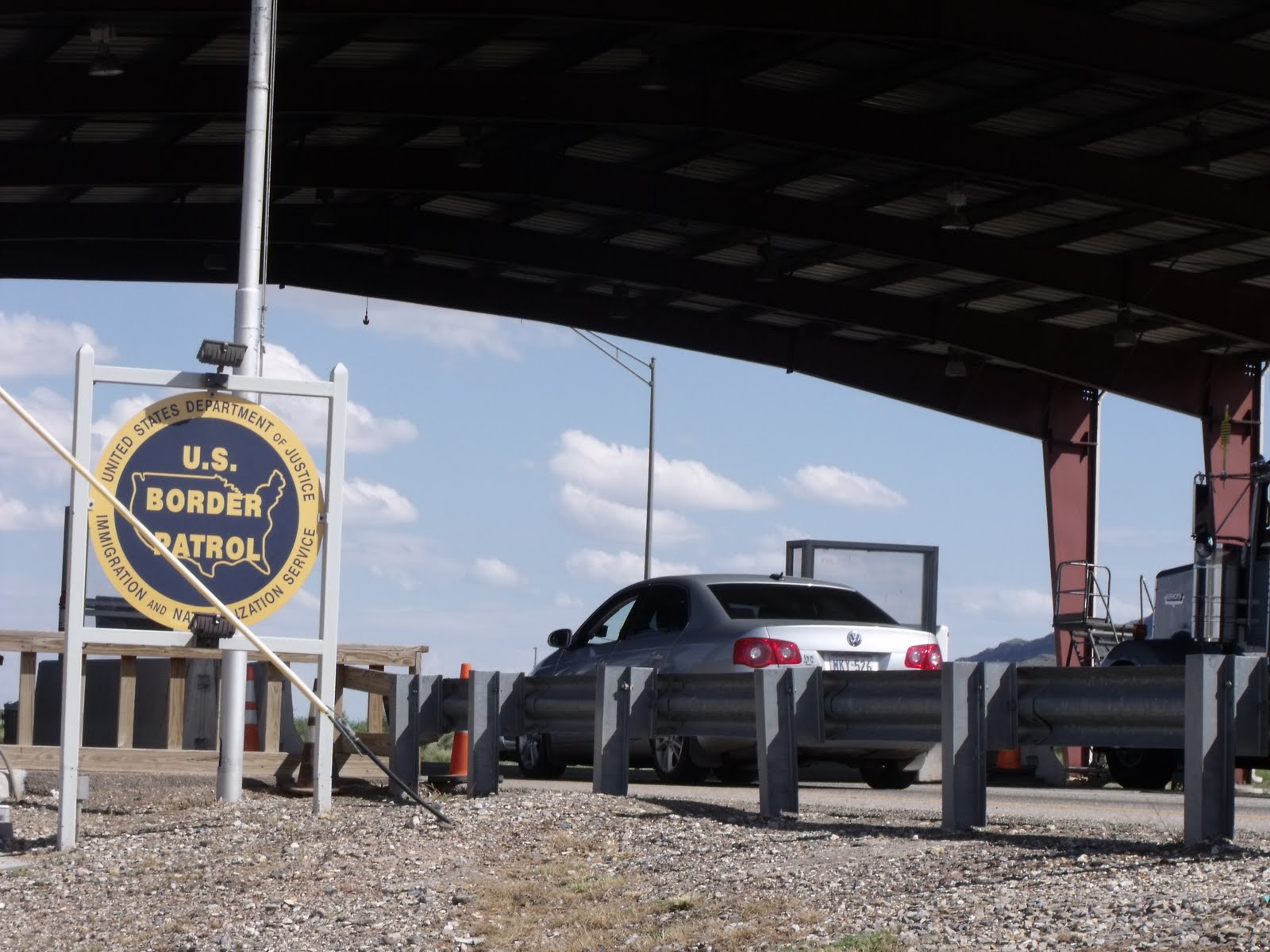
Border Patrol checkpoint at Sierra Blanca, Texas/Barry 

The Department of Homeland Security, never having defined “border security,” has been struggling how to measure it.

A product of post-9/11 politics, the term border security has proved both a godsend and a bane for Customs and Border Enforcement (CBP), the DHS agency that includes the Border Patrol. The post-9/11 association of border control operations with national security was critical to the doubling of the budget and staffing of the agency. 

Republicans and Democrats alike have eagerly approved ever increasing appropriations for border operations, including a series of supplemental and emergency appropriations that responded to alarmist political for increased border security.

But the new commitment to “securing the border” has also proved an unending headache for DHS, as it haplessly attempts to assure critics that border security is being achieved.

In keeping with the martial framing of border control as border security, DHS seized on the military concept of “operational control”  as a way to measure its progress in securing the border. The Department of Defense states: “Operational control [also known as OPCON] is the authority to perform those functions of command over subordinate forces involving organizing and employing commands and forces, assigning tasks, designating objectives, and giving authoritative direction necessary to accomplish the mission.”

Although operational control did prove a convenient way to qualify the different levels of control that CBP exercised over the southwestern border, its admission that only 873 miles of the border were under full operational control underscored the validity of the critiques of border hawks that DHS is still not serious about border security.

Deep in a hole of its own making by its embrace of the concept of border security, DHS, rather than discarding the term as misleading and inappropriate, is digging itself deeper in the border security pit.

Typical of the Democrat’s weak-kneed response to Republican critiques of immigration enforcement and border control, DHS is basically accepting the criticism that statistics of immigrant apprehensions and drug seizures don’t adequate describe changing conditions along the border.

In her May 4 testimony before the Senate Committee on Homeland Security and Governmental Affairs, DHS Secretary Janet Napolitano said that CBP is formulating a “new comprehensive index that will more holistically represent what is happening at the border and allow us to measure progress.”

In addition to numbers of arrests and seizures, DHS will also for the first time include measures of border area crime in its evaluation of the state of border security.

In addition, the new “metrics” of border security will, “also incorporate indicators of the impact of illegal cross-border activity on the quality of life in the border region. This may include calls from hospitals to report suspected illegal aliens, traffic accidents involving illegal aliens or narcotics smugglers, rates of vehicle theft and numbers of abandoned vehicles, impacts on property values, and other measures of economic activity and environmental impacts.”

These metrics constitute a bow to border hawks who contend that insecurity is widespread in the borderlands and that the traditional measures of border control don’t address the real causes of this fear – such as increased crime and a rise in spillover violence.

Clearly, though, DHS believes that this new index of border security will support its assertions that the border is more secure than ever before.  A current reading of quality of life on the border would, for example, show crime rates that are below the national average and economic conditions that are improving faster than the national average.

“Ultimately the success of our efforts along the border,” said Napolitano, “must be measured in terms of the overall security and quality of life of the border region.”

At first glance, this assessment seems eminently reasonable.

However, by associating the mission of CBP with the borderlands society, Napolitano only emboldens border hawks and border politicians who demand continual increases in the funding for border infrastructure projects, border law enforcement, and border security operations, including military deployments and drone surveillance – pork for the border.

But more irresponsibly DHS is moving further and further away from its own central mission – securing the homeland and serving as an adjunct national security apparatus. The further away we are from the terrorist attacks of Sept. 11, 2001, the more DHS is prone to Orwellian redefinitions, such as translating security as safety.

It has done this so effectively in immigration enforcement with its Secure Communities program. Translating border security as quality of life in the borderlands is another dangerous case of mission creep for a new federal bureaucracy that is itself in search of meaning. 

Tuesday, May 3, 2011

Talking About "Criminal Aliens"

Liberal immigration reformers and immigrant-rights activists generally avoid talking about “criminal aliens.”

Criminal alien is what the Departments of Justice (DOJ) and Homeland Security (DHS) call a noncitizen – whether a legal or illegal immigrant – who has been convicted of a crime. Unlike immigration restrictionists, immigrant advocates stay clear of links between immigrants and crime, and instead stress that immigrants seeking legal status are law-abiding workers and community members.

There is broad public sentiment that criminal aliens should be removed from the country – reflected in the Obama administration’s repeated declarations that criminal aliens are the focus of its immigration enforcement operations. Immigrant advocates (and the media) focus on the plight of noncriminal aliens, such as DHS detention conditions – while the plight of immigrants incarcerated by the DOJ in the prisons of the U.S. Marshals Service and the Bureau of Prisons gets much less scrutiny. As might be expected, the reform proposals that include legalization measures specifically exclude immigrants with criminal records.

Immigration and crime are topics that are increasingly linked. Anti-immigrant and anti-immigration activists – who insist that immigrants who cross illegally into the country are criminals – are mainly responsible for this immigrant-criminal linkage. By prosecuting illegal entry as a federal crime punishable by federal imprisonment (rather than as a civil violation, as was previously the practice), DHS has given the immigration backlash community more ammunition in their campaign to label illegal immigrants as common criminals.

But the fact is that many noncitizens – hundreds of thousands of them – are indeed common criminals, apart from any new categorization of immigration law violations crime by DHS through such programs as Operation Streamline.

The criminal alien issue is a central challenge of immigration reform. It’s an issue that also goes to the heart of the problems with criminal justice system and our practice of mass incarceration.

Immigrants as Inmates

On any given day there are some 33,000 immigrants living in forced confinement behind two or three lines of high perimeter fencing of razor wire. Last year DHS’ Immigration and Customs Enforcement (ICE) agency channeled 392,000 into these detention centers before they were deported.  

DHS says that it removed 195,000 criminal aliens from the country last year – that’s up 52% from the first year of the Obama administration and up 70% from the last year of the Bush administration.

The dozens of ICE detention centers – most of which are operated by private prison firms – constitute, charge immigrant advocates, a hidden archipelago of immigrant prisons.

But on any given day there are many more noncitizens – all categorized as criminal aliens -- incarcerated in a network of USMS and BOP prisons than in the DHS detention centers. What is more, there are nearly 300,000 illegal immigrants in state and local jails.

The numbers of immigrants in prison are alarmingly high, raising questions about the high costs of this mass imprisonment and about the true extent of immigrant-criminal connection.

About 25% of those inmates in USMS custody are immigrants held for immigration violations. USMS bookings for immigration violations increased from 10,181 in 1995 to 88,189 in 2010. About 17,000 immigrants are in USMS jails for immigration violations on any given day. These numbers don’t include noncitizens being held for non-immigration crimes.

In BOP prisons there are some 55,000 immigrants – or 25-27% of the total prison population in recent years. That is about double the federal incarceration rate for citizens. Approximately 23,000 of these noncitizens are incarcerated in twelve special prisons for low security criminal aliens (sentenced for illegal entry and drug violations) that are operated by private prison companies.

Then there are the hundreds of thousands immigrants found in state and local jails. As part of its Criminal Alien Program and especially the new Secure Communities program, ICE is seeking to integrate local and state law enforcement into federal immigration enforcement through data and communications systems that alert the agency when an immigrant is booked and jailed.

There is no data on number of immigrants jailed at the state and local levels. But the federal government, through the State Criminal Alien Assistance Program (SCAAP), a DOJ program that partially reimburses state and local governments for the costs of jailing illegal immigrants, does not that at least 296,000 illegal immigrants were in local and state jails in 2010. Under SCAAP, localities and states aren’t reimbursed for the costs of jailing legal immigrants, making it more difficult to estimate the number of legal immigrants who have entered local and state jails or corresponding criminal justice systems.

Prosecutions of immigrants for immigration violations are overwhelming federal courts and driving the increased need for USMS and BOP prison beds.

More than one third of all criminal prosecutions in federal courts are for immigration violations. Immigration prosecutions constitute 36% of all federal prosecutions – surpassing drug and fraud prosecutions. These immigration prosecutions are distinct from cases handled administratively by DOJ and DHS in immigration courts.

Closely linked to the increased federal prosecutions of immigration violations is the geographical concentration of federal criminal cases. In 2010, 41% of all federal criminal cases were handled by five judicial districts in the Southwest. 

Next: Immigrants and Drugs